
A Milestone for Learning Disability Nursing: Marjon’s First MSc RNLD Cohort
Released: 18.05.26
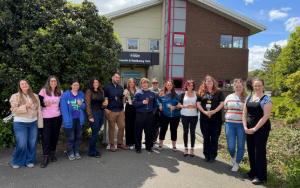
Plymouth Marjon University has marked a historic milestone with a celebration for its first cohort of MSc Registered Nurse Degree Apprenticeship (Learning Disability) students completing a qualification helping to address critical national workforce shortages while improving care and advocacy for people with learning disabilities.
As the culmination of the ‘Aspire Programme’ – the first of its kind in England – students, their supporters, lecturers and NHS partners came together at the University’s Health & Wellbeing Hub on Friday 15 May to celebrate the journey of the inaugural cohort, from aspiration through learning to entering the healthcare workforce.
The MSc Registered Nurse Degree Apprenticeship (Learning Disability) was created in response to workforce challenges facing the NHS and a sustained national decline in learning disability nursing.
Tracey Viney, Programme Leader, said: “We’re incredibly proud of our students and everyone involved in delivering this qualification to support the future of learning disability nursing. Our graduates are already embedded in the NHS, studying locally and making a difference in real services.
“The course was created to meet NHS needs and real lives, and was codeveloped with service users and employers to ensure it reflects the values and skills required in practice.”
The need for specialist learning disability nurses is well recognised nationally. The number of learning disability nurses employed in the NHS in England fell from around 5,553 in 2009 to just over 3,095 by 2024, a reduction of approximately 44 per cent. Learning disability nursing now accounts for just two per cent of all nursing students nationally, with UCAS and Royal College of Nursing analysis reporting a 36 per cent drop in acceptances between 2015 and 2023. In some regions, including parts of the South West and South East, student cohorts have fallen into single figures, while others now have no local provision at all.
Professor Richard Kyle, Professor of Allied Health & Nursing at Plymouth Marjon University, said: “Despite rising demand, the learning disability nursing workforce has shrunk by almost half over the last 15 years. That’s why it’s so important that Marjon is leading nationally in this provision, helping to shape the future direction of learning disability nursing and rebuild leadership in this vital field.”
National bodies have consistently highlighted stark health inequalities faced by people with learning disabilities, who die on average around 20 years earlier than the wider population. In recent years, organisations including Mencap, the Royal College of Nursing and senior health leaders have warned that learning disability nursing risks becoming unsustainable without new routes into the profession.
The programme has also been praised by NHS England as a model for addressing regional and national workforce challenges.
Gail Wilson, Regional Senior Nurse for Nursing, Midwifery and Social Care Nursing at NHS England - Workforce, Training and Education (South West), said: “It was a great honour to celebrate the first Marjon Aspire RNLD cohort. This innovative programme, developed in partnership between Marjon and NHS England in the South West, has created a much‑needed pipeline into learning disability nursing at a critical time for the region.
“With an attrition rate of just five per cent, the programme demonstrates what is possible through strong partnership working across the NHS, social care, employers, service users and the Marjon team. This success stands in contrast to national trends, where learning disability nursing programmes are closing and attrition rates are far higher. I am delighted by the programme’s success and encouraged by Marjon’s plans for the future.”
"This MSc apprenticeship has allowed us to develop a sustainable, locally trained workforce at a time of national shortage. These graduates will make a lasting difference for people with learning disabilities and for NHS services across the South West.”
The 15 students due to qualify have completed an immersive two‑year MSc apprenticeship, combining academic learning with diverse clinical placements. They now enter the workforce as skilled, compassionate professionals, equipped to improve care, challenge inequality and advocate for people with learning disabilities.
Learn more about studying the MSc Registered Nurse Degree Apprenticeship (Learning Disability).
Share on

