
How social inclusion at Plymouth Marjon University helped India James thrive
Released: 29.10.26
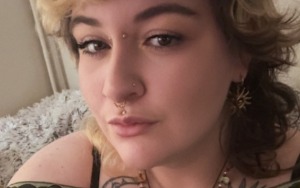
“I’ve gone from masking who I am to feeling completely accepted”
When India arrived at Plymouth Marjon University, she brought with her a lifelong experience of feeling different.
The 25-year-old Forensic Investigation student from Saltash, has lived with chronic illness, is awaiting an autism assessment, and spent much of her school years feeling as though she never quite fitted in.
“I describe myself as being like a bug in a room full of girls,” she says. “I always felt like I didn't quite fit in. I was good with one-to-one friendships, but groups were always difficult. If you were walking in a group of three, I was the one walking at the back.”
At school, making friends often felt difficult and exhausting. Like many people who suspect they may be neurodivergent, India found herself constantly trying to work out how to fit in and navigate social situations.
That uncertainty followed her into adulthood, leaving her worried about what university life might be like.
Yet stepping onto campus at Marjon proved to be a very different experience.
Finding her people
As a mature student studying Forensic Investigation, India quickly discovered that being surrounded by people with shared interests created an environment where friendships could develop naturally.
“When you go into a degree, you're surrounded by people who are interested in the same things you are,” she says. “You don't have to script yourself. You're talking to people who genuinely enjoy the same subject.”
What began as nervousness soon became confidence.
“I've ended up with a little friendship group. We sit together at lunch and help each other with studying, but we also just have genuine friendships.”
For the first time, India found herself confident enough to do something that once felt impossible.
“I've even been able to go up to people and say, ‘Hi, I'd really like to be your friend. Would you like to meet for a coffee?’ I've never felt comfortable doing that before.”
University has transformed the way she sees herself.
“My confidence has shot up since starting in September. I've gone from being quite a masking individual to never masking myself because it's a safe environment. You don't feel judged for being yourself.”
Overcoming barriers to learning
Alongside the social challenges, India also manages significant health difficulties.
She experiences chronic nausea on a daily basis and lives with conditions that can affect attendance, concentration and assessment performance. Initially, however, she hesitated to seek support.
“I told myself I didn't qualify for DIAS,” she explains. “I thought, ‘I'm not disabled enough. I'm not neurodiverse enough.’”
Eventually she contacted Marjon's Disability and Inclusion Advice Service (DIAS) and immediately found a team willing to listen.
“The response was basically, ‘Yes, absolutely, you qualify for support.’”
The experience was both practical and deeply reassuring.
“It was validating. For a long time, I'd convinced myself I wasn't deserving of the support. They helped me understand that what I'm dealing with does matter and that support is there for people like me.”
Since then, DIAS has helped put a range of adjustments in place, including additional time in exams and practical assessments, flexibility around extenuating circumstances during periods of ill health, and recorded lectures so she can keep up with learning during flare-ups.
“I don't want being poorly to get in the way of what I want to achieve,” she says. “The support has allowed me to believe that I can achieve what I want to achieve.”
A community that cares
India's support network extends beyond formal academic services.
During a particularly difficult period in her first year, she found herself seeking help from Marjon's Chaplaincy team.
“One day I just broke down in tears,” she recalls. “I went into the chaplaincy and Michelle was absolutely lovely.”
She describes the experience as one of genuine care and compassion.
“They listened, offered advice and checked in afterwards. It felt like somebody really cared about how I was doing.”
The support wasn't limited to one conversation.
“Any time Michelle saw me on campus, she'd ask how I was. It's rare to find people who are willing to listen and keep checking in.”
For India, these everyday acts of kindness make a lasting difference.
“When I knew I was ready to come back to university, I knew I wanted to come back to Marjon because it is such a supportive environment. You never feel like you're being judged.”
Looking ahead
Now entering her second year, India is optimistic about the future. She hopes to continue building her confidence, complete her degree and pursue a career in forensics.
She also hopes that by talking openly about chronic illness and possible neurodivergence, she can encourage others to seek support.
“There is still a stigma,” she says. “People think they're not poorly enough, not disabled enough, not neurodiverse enough. But the support is there if you need it.”
Her message to other students is simple: don't struggle alone.
“Once I reached out, people were so helpful. It made me realise I didn't have to do everything by myself.”
For India, social inclusion isn't about special treatment. It's about being understood, valued and given the opportunity to succeed.
And at Marjon, she says, that's exactly what she has found.
“I've gone from feeling like I didn't fit in to feeling comfortable being myself. That's the biggest difference Marjon has made.”
- Plymouth Marjon University was recently awarded University of the Year for Social Inclusion, by the Times and Sunday Times Good University Guide.
- To learn more about studying here, register for our next Open Day.
Share on

