
Plymouth forensics expert reveals how footwear can crack cold cases on BBC Crimewatch
Released: 13.04.26
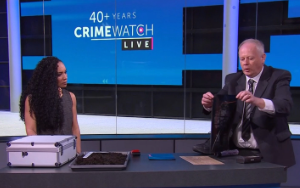
A Plymouth Marjon University forensics expert appeared on the BBCs Crimewatch Live programme to provide expert analysis into footwear involved in a cold case crime.
David Moore, Programme Leader and Senior Lecturer in Forensic Investigation and Criminology at Plymouth Marjon University, was called upon to provide expert insight into how footwear analysis can play a crucial role in building a legal case.
David said: “It’s really important that investigators at a crime scene start building a hypothesis, not only of what has gone on, but where do they think a suspect may have walked.”
The science behind footwear evidence
He explained to viewers how a tread in mud can indicate shoe size, how forensic teams take casts of footwear, and how they can determine whether a suspect has tracked dirt or blood into a crime scene.
“We might have a footwear mark in some soil or some snow, which we can photograph with a scale, and it will give us a size and a tread. If we have a suspect who has walked dirt or blood into a crime scene, we can detect and document it, and take that footwear mark to court.”
He also described and demonstrated how non-visible footwear marks can be lifted and recovered, even when they have not walked in any substances.
How unique wear patterns help identify suspects
There are tens of thousands of footwear records in a database used to match evidence from crime scenes, meaning suspects now have their footprints taken as well as their fingerprints when arrested.
“Shoe tread can lead to a make and model of footwear worn, particularly of trainers, but once a person starts wearing a piece of footwear it starts becoming unique. This might be the wear pattern on one side of the shoe or the heel or sole, or foreign items such as stones stuck in a shoe or damage.”
Experts can also analyse someone’s walk and their gait, and, looking at CCTV from the periphery of a crime, might be able to identify a suspect with those traits.
He added: “It was a real privilege to be invited to appear on Crimewatch Live again yesterday. The BBC presenters Michelle Ackerley and Rav Wilding have such a passion for supporting justice and society, and it is always incredible to see the work which goes on behind the scenes to make a live programme work.”
This national appearance highlights the real‑world expertise students benefit from on Plymouth Marjon University’s Forensic Investigation and Criminology programmes.
Share on

