
Young people bring Plymouth Sound Marine Park to life using Minecraft
Released: 19.12.25
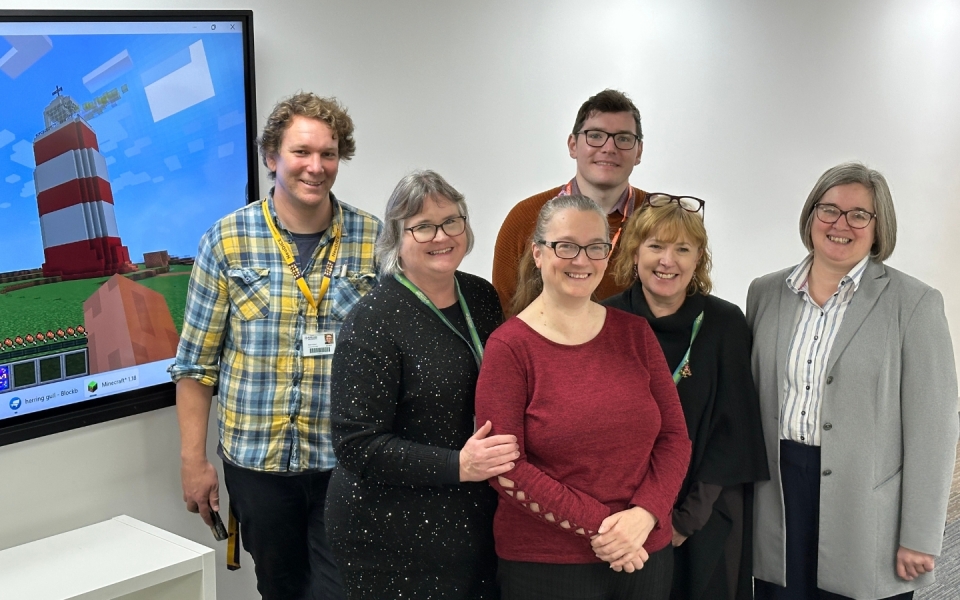
Young people bring Plymouth Sound Marine Park to life using Minecraft, thanks to researchers at Plymouth Marjon University and the University of Salford
A groundbreaking marine education project, Minecraft in the Blue brought together city partners to help young people understand what lies beneath the waves, as they recreated a Minecraft world including local waterfront landmarks.
The project opened meaningful conversations about biodiversity and conservation, while helping young people build social skills, creativity and confidence.
Funded by Plymouth Sound National Marine Park, and developed in partnership with Plymouth Marjon University, Plymouth City Council Youth Service and the University of Salford, the team successfully blended outdoor leaning with gaming during a summer holiday programme for 13 and 14-year-olds.
Dr Tracy Hayes from Plymouth Marjon University, said: “For us, this project is about more than Minecraft - it’s about hearing young people and supporting their ideas. Youth work gives young people the confidence to express themselves. Their ideas shaped the Minecraft world in ways we could never have imagined as adults - their voices, creativity and curiosity are right at the heart of this new Minecraft world.”
Joining a roundtable discussion and demonstration of the Minecraft world at Plymouth Marjon University, Councillor Tom Briars-Delve, Cabinet Member for Environment and Climate Change, commented: “As Britain’s Ocean City, it’s vital that residents and visitors engage with Plymouth Sound National Marine Park. I’m delighted Marjon University is using technology like Minecraft to connect more people locally and globally with Plymouth and join us in exploring, engaging, and celebrating this incredible marine environment.”
To inspire their design, the young people explored outdoor spaces, took part in rock pooling, photographed the area, made sound recordings and noted their observations. These real-world experiences shaped the digital landscape, including Smeaton’s Tower and Tinside Lido, which they recreated block by block.
Dr Adam Hart, University of Salford, said: “We hope Plymouth Youth Service and Plymouth Sound National Marine Park will continue to use and develop this world alongside young people. Ultimately, we’d love to see it made available nationally so others can immerse themselves in the marine environment through Minecraft. This is a great example of how young people can creatively learn more about where they live.”
Elaine Hayes, CEO of Plymouth Sound National Marine Park, said: “I am really pleased we have been able to fund this project, connecting young people digitally with the National Marine Park. Minecraft is played by over 200 million people worldwide – all of whom can and should be able to experience their ocean.”
The young people learnt more about wildlife, for example, discovering that there is no such thing as a generic “seagull”, and researching the species and habitats of Plymouth Sound. They added digital wildlife into the Minecraft world, including herring gulls, dolphins, basking sharks, limpets, seagrass, seals, fish, pigeons, cormorants, and leatherback turtles. Polar bears and parrots made a brief appearance – and were swiftly removed.
One powerful addition saw a turtle spawn tangled in plastic waste. Players must free it and dispose of the litter correctly (in the newly created bin) – reinforcing messages about marine pollution and care for the environment.
Want to work with children? Check out our courses here: Education, Children & Communities | Plymouth Marjon University
Pictured (left to right) are: Stu Watson, Outdoor Education Lecturer, Dr Tracy Hayes, Academic Director of Research & Knowledge Exchange (Education) and Associate Professor of Education, Rachel Dawe, Youth Worker at Plymouth City Council, Dr Adam Hart, University of Salford, Caroline Down, Lecturer - Department of Human Sciences, Society & Culture, Michelle Jones, Deputy Vice-Chancellor.
Share on

