
MSc Sport Performance Science
The science behind the performance. Our MSc Sport Performance Science prepares you for a career at the forefront of elite sport, combining advanced physiology, biomechanics, and data analytics with the practical skills that high-performance environments demand.


Collaborative relationships with professional athletes and sports teams.

Apply now for this course
Entry requirements
A degree at 2:1 or above in a subject related to sport and health sciences and/or relevant professional experience
Applicants with other qualifications and/or experience will be considered on an individual basis
UCAS code Apply to Marjon
UCAS institution code P63
Duration One year full-time or two years part-time
Any questions about postgraduate study at Marjon?
Contact Rachel Bailey-Lewis, our Student Recruitment Officer (Postgraduate).
Course Summary
The MSc Sport Performance Science is built for the demands of modern high-performance sport, where physiology, biomechanics, and data analytics work together to drive athlete performance.
You'll develop advanced practical skills in laboratory and field-based performance testing, learning to design and evaluate physiological and biomechanical assessments using industry-standard equipment. Alongside this, you'll build genuine digital capability, working with programming tools and data visualisation platforms to analyse, interpret, and communicate complex performance data in the way applied sport science environments now expect.
Learning is rooted in authentic practice. You'll work with real-world sport datasets, produce professional dashboards and reports, and complete assessments that mirror the tasks of a working performance scientist. Whether you're evaluating training load, interpreting movement data, or designing a research study, the emphasis is always on applying science to real performance problems.
Ask a student
Why this course at Marjon?
Progress towards CASES accreditation with a programme built around the competencies the framework requires.
Develop advanced skills in physiology, biomechanics, and data analytics - three disciplines that define modern high-performance sport.
Work with real sport datasets and produce professional outputs that mirror applied practice from day one.
Get hands-on in our sport science labs, gaining practical experience in physiological and biomechanical testing and assessment.
Opportunities to contribute to publishable research, present at conferences, and build a profile that stands out to employers and doctoral programmes.
Build the digital and analytical skills that are increasingly expected in elite sport environments and open doors into data science pathways beyond sport.
Modules for this course
1st Year
Applied Physiology of Human Performance
Applied Research Skills in Data & Performance
Biomechanical Approaches to Strength and Conditioning
Applied Data Visualisation in Sport
Masters Thesis / Project
This course is perfect if you're curious about
What does an elite athlete's physiological profile actually tell you?
Can data predict when an athlete is about to break down?
How do the world's best sports teams use data to make performance decisions?
What separates a good strength programme from a great one?
How do you turn raw movement data into something a coach can actually use?
Could the next breakthrough in sport performance come from better science?
What might you become?
The MSc Sport Performance Science is designed to launch or accelerate your career in high-performance sport. Whether you're a recent graduate looking to stand out in a competitive field, an early-career practitioner ready to take the next step, or an experienced scientist seeking to sharpen your analytical and research credentials, this programme gives you the skills, experience, and professional grounding to move forward with confidence.
How you’ll be taught and assessed?
How will you be taught?
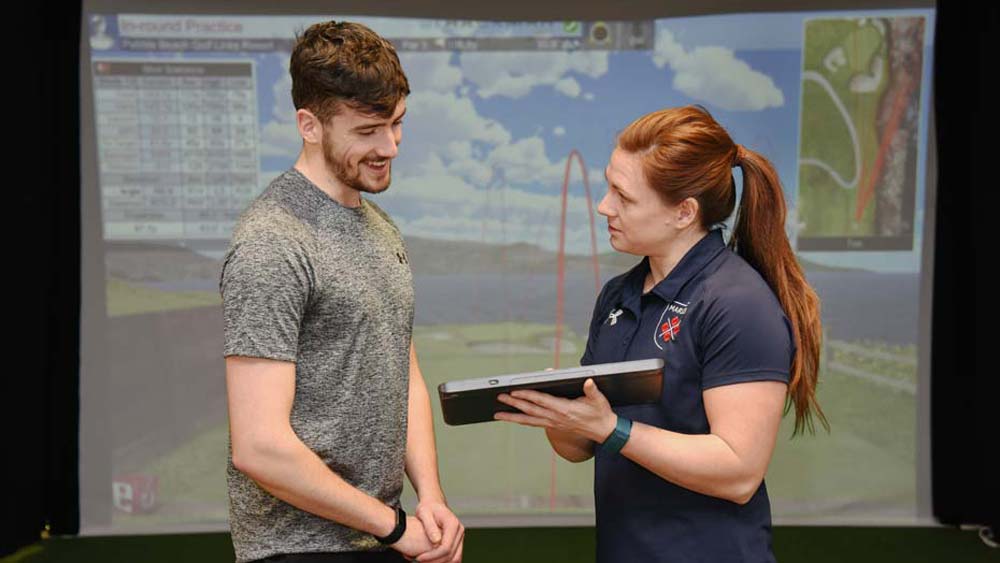
You will be taught through a combination of intensive days, workshops, lectures, seminars, lab practicals, interactive group discussion and field work.
How will you be assessed?
Assessment methods are varied and include coursework such as essays, reports, portofolios and your research thesis. There are also many practical based assessments embedded within modules.

Fees and funding
Fees UK students: £9,790
This fee covers your tuition and access to course-specific equipment and facilities, as well associated services including access to the library, study skills support, IT support, student support and wellbeing services and membership of the Student Union. There may be additional costs by course.
Funding available for this course
Our Student Funding Advisors offer confidential and impartial advice about your funding options.
Learn moreLecturers

Melissa has research interests that include increasing self-awareness and positive growth and mental health, developing confidence and emotional control, reducing anxiety, and facilitating communication.


Sophie, who plays pool for England, teaches sport and exercise psychology principles and how these can be applied to improve sport performance and wellbeing.

Joe has 20 years experience within the area of health and exercise physiology and researches health care interventions, physiology and metabolism. He previously worked as an Occupational Physiologist and Researcher for the UK Ministry of Defence and the Netherlands National Research Office.

Apply now for this course
Share this page on

