BSc (Hons) Sports Therapy
Develop the knowledge, skills, and clinical confidence required to become a professional Sports Therapist. Gain a minimum of 400 hours of hands-on clinical experience within our on-site clinics, working with a diverse range of clients, seeking to improve their health, wellbeing, and physical performance. The course is accredited by the Sports Therapy Organisation, ensuring that the curriculum meets professional standards and prepares graduates for a successful career within the profession.

Open for Clearing. Open for You.
This course is ready when you are! Apply through Clearing today to secure your space.


Entry requirements
Three A-levels at grades BBC - BBB
Or BTEC triple grades DMM - DDM
Access to HE Diploma accepted with credits in line with UCAS tariff point range
Or T level M
GCSE Grade C or 4 English Language or an acceptable equivalent qualification
Applicants with other qualifications and/or experience will be considered on an individual basis
We will accept 2 AS levels in lieu of one A level but must be accompanied by 2 A Levels or BTECs General Studies is excluded.
A DBS (Disclosure and Barring Service) check is required.
UCAS points 104-120
UCAS code C631
UCAS institution code P63
Duration Three years full-time and part-time options available
Any questions?
Contact Charley, our Applicant Support Coordinator, if you have any questions. Email: applicantsupport@marjon.ac.uk and Charley will get back to you!
Course Summary
The sports therapy profession is evolving rapidly, creating exciting opportunities for highly skilled practitioners who can assess, treat, rehabilitate, and support individuals across sport, exercise, and healthcare settings. Accredited by the Sports Therapy Organisation (STO), our BSc (Hons) Sports Therapy degree has been specifically designed to meet the demands of contemporary practice and prepare graduates for successful careers within the profession.
This dynamic and hands-on programme combines evidence-based theory with extensive practical experience. From the very start of your degree, you will develop your clinical skills through supervised practice in our on-site Sports Therapy Clinic, gaining a minimum of 400 hours of real-world clinical experience. Working with a diverse range of clients, from recreational exercisers to competitive athletes, you will learn how to assess injuries, deliver effective treatments, and design rehabilitation programmes that help people return to activity safely and confidently.
Our state-of-the-art facilities provide access to a wide range of industry-standard technologies used in modern sports therapy practice. Students gain experience using equipment such as diagnostic ultrasound, anti-gravity treadmills, RS Footscan technology, laser therapy, shockwave therapy, and electrotherapy modalities, helping to bridge the gap between theory and professional practice.
As a student on the programme, you will also benefit from access to our cutting-edge CASES-accredited Biomechanics and Physiology Laboratories, where you can develop practical assessment skills, undertake research, and utilise advanced equipment to investigate human performance, movement, injury mechanisms, and rehabilitation outcomes.

Throughout the degree, you will build a comprehensive understanding of functional anatomy, physiology, nutrition, injury prevention, soft tissue therapy, rehabilitation, strength and conditioning, and professional practice. Combined with extensive clinical experience and exposure to innovative technologies, these areas provide the knowledge, skills, and confidence required to thrive in a wide range of careers within sports therapy and related healthcare professions.
Why this course at Marjon?
Accredited by the Sports Therapy Organisation (STO) Study on a professionally accredited programme that meets industry standards and prepares you for a successful career as a Sports Therapist.
400+ Hours of Clinical Experience Gain hands-on clinical experience through our on-site Sports Therapy Clinics and external placement opportunities. Work with a diverse range of clients, developing the practical skills, clinical reasoning, and confidence required for professional practice.
Industry-Standard Facilities Develop your skills using cutting-edge equipment, including diagnostic ultrasound, anti-gravity treadmills, RS Footscan technology, shockwave therapy, laser therapy, and electrotherapy modalities commonly used in modern clinical practice.
Learn from Experienced Practitioners Be taught and supported by experienced Sports Therapists, researchers, and clinicians who bring real-world expertise, current research, and industry insight into every aspect of the programme.
CASES-Accredited Laboratories Access our state-of-the-art CASES-accredited Biomechanics and Physiology Laboratories, providing opportunities to undertake research, perform advanced assessments, and develop a deeper understanding of human performance, injury, and rehabilitation.
Real Clients. Real Experience. Real Impact. From professional athletes and sports teams to members of the public and specialist populations. This diverse clinical experience will challenge you, build your confidence, and prepare you to succeed in sports therapy from day one after Graduation.
Modules for this course
Course Snapshot
“ In the first year we learnt the basic anatomy and physiology needed to assess soft tissue injuries and we got hands-on experience learning massage techniques. In our second year we learnt about clinical diagnoses and different treatment techniques, and personal training and gym instructor qualifications are built in to the coaching module. Third year involves injury prevention, strength and conditioning as well as a dissertation. There’s loads of placement opportunities throughout the degree, including at the on-site Marjon Sports Therapy Clinic.”
1st Year
Engaging with learning: personal and professional development
Introduction to sport, exercise and health psychology
Physiology and Nutrition
Functional anatomy for sport therapy and rehabilitation
Soft tissue theory
Musculoskeletal assessment
2nd Year
Research methods and analysis in sport and health sciences
Work-based learning
Injury treatment modalities
Principles of exercise and coaching
Spinal Assessments and Treatments
Pathology and clinical reasoning
3rd Year
Honours project
Injury biomechanics
Strength training, conditioning and rehabilitation
Musculoskeletal rehabilitation
Clinical experience and business
Current students say...
Steph Beck
“I love the practical aspect of the course, being able to work with a wide variety of different clients who have different types of pain, symptoms and injuries. I’ve gained knowledge on how the body functions and what happens if the body isn’t functioning properly. I now understand how to diagnose, treat and rehabilitate a variety of different injuries. My confidence when working with different sports and every day injuries has increased as every day I am put in situations that make me learn.”
Kelly Kemp
“I enjoy the practical side of the course, working in the sports therapy clinic and discovering hands-on which treatments work best for different injuries. My writing skills are stronger from writing case studies, lab reports and presentations and I have developed the ability to critically analyse research.My self-confidence has increased substantially from working in the clinic and pitch-side with sports teams. I am now confident in assessing, diagnosing, treating and rehabilitating injuries.”
Karen Eccles
“I enjoy learning about how the use of manual therapies can help injured athletes with various conditions and I enjoy helping fellow students with their sports injuries. I also enjoy meeting up with my course mates during and after lectures. I’m challenged and made to think and I’ve learnt to think critically, not just accepting everything I read.”
This course is perfect if you’re curious about
Why do injuries happen? Understand the causes of injury and how to prevent them.
How do people recover from injury? Learn how to assess, treat, and rehabilitate patients back to full function.
What makes the human body perform? Explore anatomy, physiology, biomechanics, and movement.
How do elite athletes stay at the top of their game? Discover the science behind performance, recovery, and rehabilitation.
How can technology improve outcomes? Use cutting-edge equipment to assess, monitor, and support recovery.
How can I make a difference through sport and health? Turn your passion into a rewarding career helping people move, perform, and feel better.
“ The student’s knowledge throughout the training season has been a massive boost to the team. I have to comment on their professionalism, which they excelled in. They conducted themselves in a fantastic manor. Not only did they support us at the Championships, but they supported other crews that competed, making them integral to the event and I thank them greatly for their willingness! I have received many positive comments regarding their skills and help provided.”
See where our graduates are now
Abner Bruzzichessi
“Marjon played a huge role in my journey into professional football, giving me practical experience, industry insight and the confidence to pursue a career in elite sport. The support from lecturers helped me develop personally and professionally, leading to roles at Plymouth Argyle and Manchester United. I learned that opportunities don't always come in the role you want straight away. Hard work, flexibility and gaining experience wherever possible are key to achieving your goals.”
Sports Therapist at Manchester United
Chloe Leach
I studied at Marjon from 2020-2023, benefiting from small teaching groups, excellent facilities & early clinical experience in the on-site teaching clinic. A two-year placement with Devonport Services provided valuable sport experience. Since graduating, I have progressed from 2XV Men’s Lead Sports Therapist to 1XV Men’s Medical Lead, supporting Marjon placement students. I also work with the Royal Navy Rugby Men’s Medical Team and have gained Championship-level experience with London Scottish.
Devonport Men's Lead Therapist
What might you become?
Our Sports Therapy graduates are highly sought after for their practical skills, clinical confidence, and industry-ready experience. The programme is designed to produce employable graduates who are prepared to make an immediate impact across sport, healthcare, and rehabilitation settings.
Graduates have progressed into exciting careers as Sports Therapists, Rehabilitation Specialists, Performance Support Practitioners, Clinical Demonstrators, and Strength and Conditioning professionals, working across both the private and public sectors. Career opportunities include roles within professional sports clubs, sports injury clinics, private healthcare providers, community rehabilitation services, and selected NHS settings.
Our graduates have secured positions with organisations including Plymouth Argyle FC, Manchester United FC, Torquay United FC, Plymouth Albion RFC, and Exeter Chiefs RFC. Others have gone on to establish and grow their own successful sports therapy, rehabilitation, and performance businesses.
For those wishing to continue their academic journey, the degree also provides an excellent foundation for postgraduate study, including Master's degrees, PhDs, and teacher training through a Postgraduate Certificate in Education (PGCE).
Whether your ambition is to work in elite sport, healthcare, rehabilitation, education, or to build your own business, this degree will provide the knowledge, clinical experience, and professional network to help you achieve your goals.
Accreditation
_Logo.jpg)
Sports Therapy Organisation (STO)
STO is a not-for-profit organisation that works with industry and sport governing bodies and supports its members by driving standards and providing opportunities.
The Chartered Institute for the Management of Sport and Physical Activity
CIMSPA is the professional development body for the UK’s sport and physical activity sector, committed to supporting, developing and enabling professionals and organisations to succeed and, as a result, inspire our nation to become more active.
CIMSPA - Quality Assured
This badge recognises CIMSPA education partners who have evidenced best practice within most of their operations, processes, and practices, and are seen to be offering highest quality provision to its learner. This involves completion of CIMSPA's annual quality assurance review in order to maintain this badge.
How you’ll be taught and assessed?
How will you be taught?
Our Sports Therapy programme uses a blended approach, combining face-to-face teaching with high-quality digital resources to build both academic knowledge and practical clinical skills.
You will learn through lectures, seminars, tutorials, workshops, placements, and supervised practice. This supports the development of critical thinking, clinical reasoning, problem-solving, and evidence-based decision-making for modern healthcare practice.
Practical learning takes place in our dedicated Teaching Clinic, commercial Sports Therapy Clinic, and CASES-accredited Biomechanics and Physiology Labs, giving you hands-on experience, real-world application, and access to industry-standard equipment.
How will you be assessed?
A range of assessment methods is used to develop and evaluate both academic knowledge and clinical skills. These reflect the demands of modern sports therapy practice and may include case studies, reports, essays, research posters, presentations, multiple choice exams, practical exams, competency-based assessments, rehabilitation planning tasks, reflective portfolios, clinical logs, and professional discussions.
This variety allows you to demonstrate your understanding in different ways while developing key skills such as communication, critical thinking, clinical reasoning, and practical application, supporting your preparation for a career in Sports Therapy.
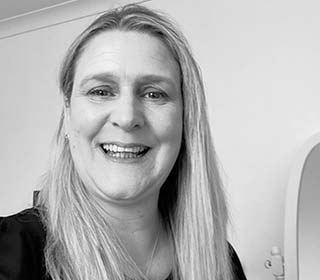
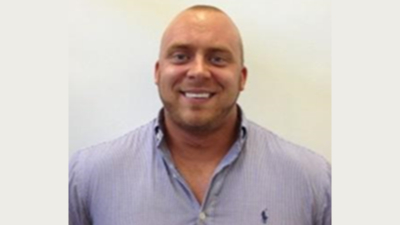
Sarah has worked with international, national and local sports persons from a variety of disciplines for over 20 years. She has worked within championship football, professional basketball, academy squads within professional rugby and football and professional ice hockey. She holds professional qualifications in manual therapy, acupuncture and she is a tutor for the RFU Intermediate Care in Sport qualification. She is also a member of the Sports Therapy Organisation (STO) Executive Committee, Complementary and Natural Health Care Council, Federation of Holistic therapists (FHT), British Association of Sport and Exercise Sciences (BASES) and The British Association of Sport Rehabilitators and Trainers (BASRaT).
Fees and funding
Fees UK students: £9,790 per annum
This fee covers your tuition and access to course-specific equipment and facilities, as well associated services including access to the library, study skills support, IT support, student support and wellbeing services and membership of the Student Union. There may be additional costs by course.
Additional costs:
Students are required to self-fund the following:
- A DBS check (£52)
- A first aid course (if you have not completed one)
- Marjon sports kit (£25-100)
- Printing costs
- Travel costs associated with placements and case studies
- Insurance for work placements (£35 per year)
Funding available for this course
Our Student Funding Advisors offer confidential and impartial advice about your funding options.
Learn moreLecturers
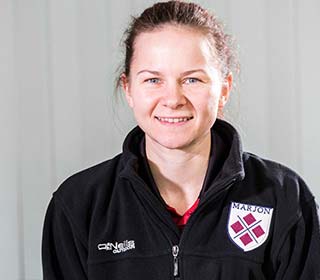
Vicki specialises in exercise rehabilitation and has worked with diverse groups including adolescents, sports people, disabled athletes, fire service personnel and sarcoma patients.

Frequently asked questions
Q1 Do I need a DBS check?
Q2 What career opportunities are available after graduation?
Q3 How much clinical experience will I gain?
Q4 When do I start working with patients?
Q5 Do I need to be good at sport to study Sports Therapy?
Q6 What facilities will I have access to?
Find out more about studying BSc (Hons) Sports Therapy at Marjon
Discover Uni collects data about university courses in the UK. All universities publish Discover Uni data on their online course pages enabling you to compare similar courses at different universities.
Share this page on

